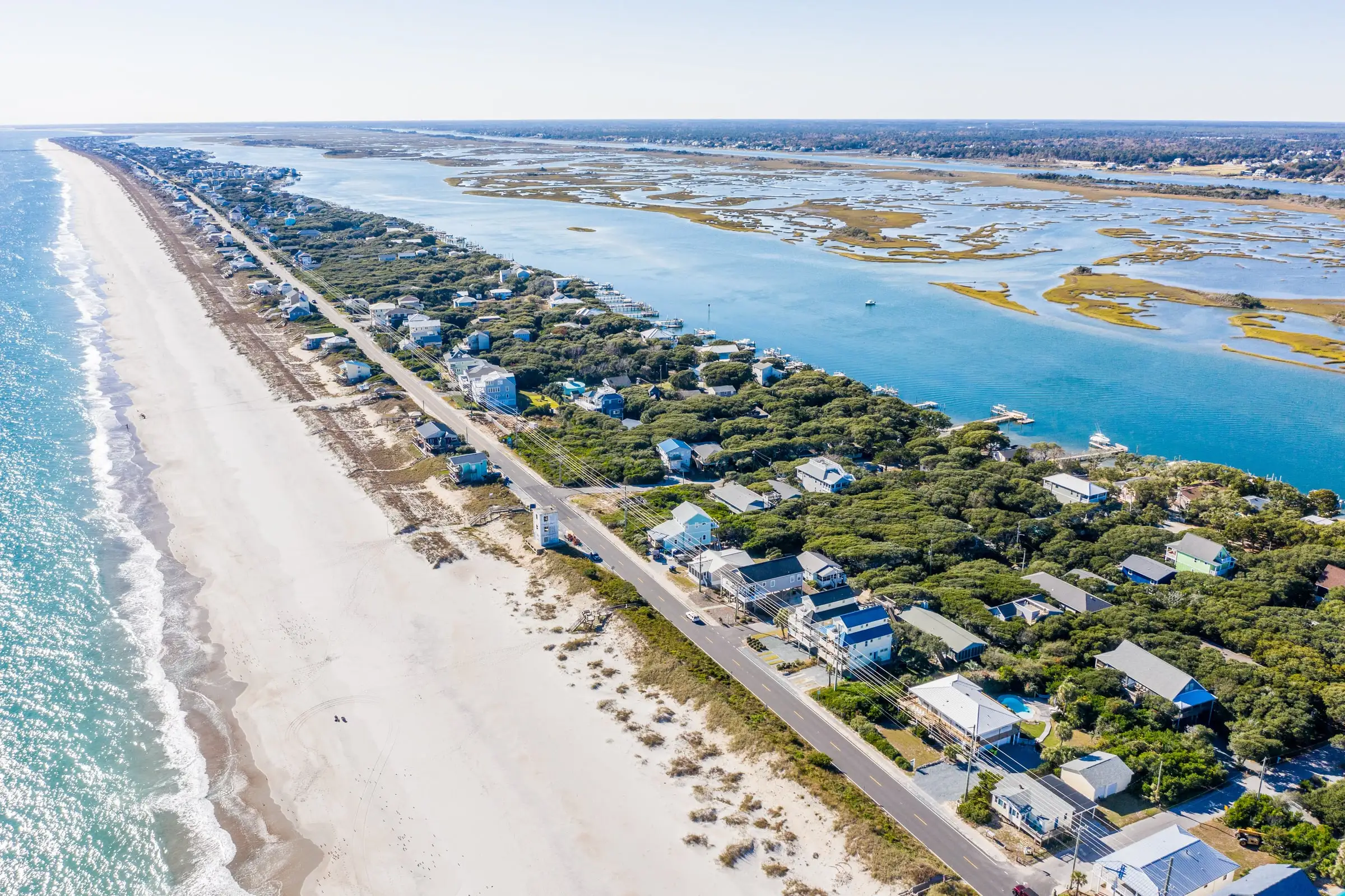
Shelling is the cheapest and best thing to do on Topsail Island, and it is the one activity that rewards getting up early on vacation. This is a barrier island with inlets at both ends, three fishing piers, and a bottom that gives up fossil shark teeth after a good blow. Some mornings the wrack line is nothing but broken coquina. Other mornings, after the right wind, you walk 300 yards and fill a bag.
Here is how to stack the odds in your favor.
Time it right, because timing beats effort
Three things decide whether you find anything, and only one of them is how far you walk.
Tide. Work the hour on either side of low tide. Low water uncovers the shell hash, the tide pools, and the little sandbars where shells pile up naturally. Check a tide chart the night before and plan around it, because the difference between low tide and high tide on the same beach is the difference between a full bag and an empty one.
Time of day. Go at first light. Shelling is a race against every other family on the island, and the beach gets picked over fast in the summer. An early walk is also the coolest, quietest part of a Topsail day.
Weather. This is the big one. Wind and waves are what dig shells out of the bottom and throw them onto the sand, so the best shelling on Topsail happens right after weather: a nor’easter, a passing tropical system, or two or three days of steady northeast wind. Fall and winter consistently beat midsummer for the same reason. If you are here in July and the ocean has been flat and glassy for a week, expect slim pickings. If a front just blew through, get out there at dawn.
Where to walk: three different zones
Topsail is 26 miles long and the island is not uniform. What you find depends a lot on which end you are on.
North Topsail Beach and New River Inlet: shark teeth
The northern end is the shark tooth end. The beaches in North Topsail Beach, particularly the stretch running up toward New River Inlet and the area around Seaview Pier, turn up teeth regularly, including the black fossilized ones that came out of much older sediment offshore. Inlets are natural sorting machines: the current pushes heavier material into predictable places, and teeth are heavy.
Surf City: the everyday shell walk
The public accesses in Surf City are the practical option if you are staying mid-island, and they produce a steady mix of whelks, scallops, and colorful augers. The stretch just south of the Surf City Ocean Pier is the reliable spot, because the pier pilings and the tidal action around them drop small shells in the same places over and over. This is also the easiest walk to do with kids, since you are never far from a parking lot and a bathroom.
Topsail Beach and the south end: the bigger shells
Down at the south end of the island, where the inlet meets the sound near The Point, you get a different haul: olive shells, larger whelks, and sand dollars that come in noticeably better condition than what you find in the middle of the island. (What people around here call a conch is almost always a knobbed or lightning whelk. True conchs live farther south.) Shark teeth are less common down here, but if you want an intact whelk for the mantle, this is where to look. It is a longer walk from the nearest parking, which is exactly why the shells last longer.
What you are actually looking for
The regulars on Topsail: lightning and channeled whelks, scallops, augers (long, skinny spirals, often striped), coquina clams (tiny, pastel, everywhere), moon snails, banded tulips, slipper shells, pen shells, oysters, and sand dollars.
The trophy is the Scotch bonnet, North Carolina’s state shell and the first state shell adopted anywhere in the country, back in 1965. Be realistic about it. Scotch bonnets live in deeper water and the state’s real hot spot is up around Cape Lookout, so on Topsail a bonnet is a rare find, and at two to four inches it is easy to walk right past. If you find one, you earned it.
On the sound side you get a completely different set: oysters, hard clams, periwinkles, and the occasional intact whelk sitting in the mud flat at dead low tide. Worth a look while the kids are crabbing off the dock, though anything alive stays put.
How to actually spot a shark tooth
Most people never find one because they are looking at the wrong part of the beach. Shark teeth do not sit in clean open sand. They collect in the darker gravel and broken shell hash right along the waterline and in the little troughs left as the tide drops.
What you are hunting is a triangle with one straight edge, glossy, usually black or slate gray and sometimes brown or tan. The gloss is the tell: fossilized enamel catches light differently than wet shell fragments. Bull, tiger, and sand shark teeth are the common Topsail finds, and most are small, from fingernail size down to a grain of rice. Slow down, crouch, and scan a two foot patch at a time instead of sweeping the whole beach with your eyes. Once you find your first one, you will start finding them everywhere, which tells you it was always a training problem, not a supply problem.
While you are down there, watch for sea glass too. Topsail turns up whites, greens, and browns, with cobalt blue being the rare one.
The rules, and they are simple
North Carolina lets you take empty shells, sea glass, and driftwood off a public beach as long as you are not digging into the dunes. What you may not take is anything alive.
- Live shells stay. If the animal is still inside, put it back in the water.
- Live sand dollars stay. A live sand dollar is dark red, brown, or purple, and often slightly fuzzy with tiny spines that move. A dead one is bone white and brittle. Only the white ones come home.
- Sea turtle nests are protected by law. Nesting season on Topsail runs roughly May 1 through October 31, and volunteers with the Topsail Turtle Project mark and monitor nests along the whole island. The 2026 season has logged more than 140 nests so far, including four green turtle nests, which are genuinely rare here. Do not touch or disturb a marked nest. North Topsail Beach requires beach gear to be set at least 20 feet from a nest, and that is the right standard to apply anywhere on the island, so keep chairs, tents, and coolers well back and never set gear between a nest and the ocean. Fill in the holes your kids dig, take your gear off the beach at night, and if you walk before dawn in season, use a red light instead of a white one.
None of this is a hassle. It is the reason there is anything left to find.
What to bring
Nothing fancy, and that is the point.
- A mesh bag so sand and water fall out instead of riding home with you.
- A cheap kitchen strainer or scoop if you are hunting shark teeth with kids. Sifting the shell hash turns a frustrating hunt into a game.
- Water shoes. Broken oyster and pen shell will cut a bare foot fast, especially on the sound side.
- A tide chart on your phone, checked the night before.
- Sunrise clothes. It is cooler on the beach at 6:30am than you expect in June.
Doing it from Sound to Sea
This is one of the small arguments for staying mid-island on a lot like ours. Sound to Sea sits about 400 feet from a private beach access, which means an early low-tide walk is a barefoot decision, not a driving decision. You step out, walk to the sand, and are working the wrack line before the parking lots fill.
Then, when you come back, there is an outdoor shower to rinse the sand and the bag off before anything comes inside, and a hose for the shells. The sound-side neighborhood dock is about 300 feet the other direction, so on a dead low tide you can go look at the mud flat for oysters and whelks without ever getting in the car. Look, do not harvest: live oysters and clams need a North Carolina Coastal Recreational Fishing License and fall under season and size rules, which our fishing and crabbing guide covers.
For the beach accesses themselves and which ones suit kids, see our guide to the best family beaches on Topsail Island. If you are trying to pick a week, the best time to visit Topsail Island guide breaks down the months, and the short version for shellers is that the fall and winter weeks nobody books are the best ones for filling a bag.
Why book direct
Booking Sound to Sea directly gets you the best rate with no third-party service fees, and it gets you a host you can actually ask a question. Text us the week before you come and we will tell you what the ocean has been doing, when low tide falls during your stay, and which access has been producing. That is the kind of thing a listing page cannot give you.