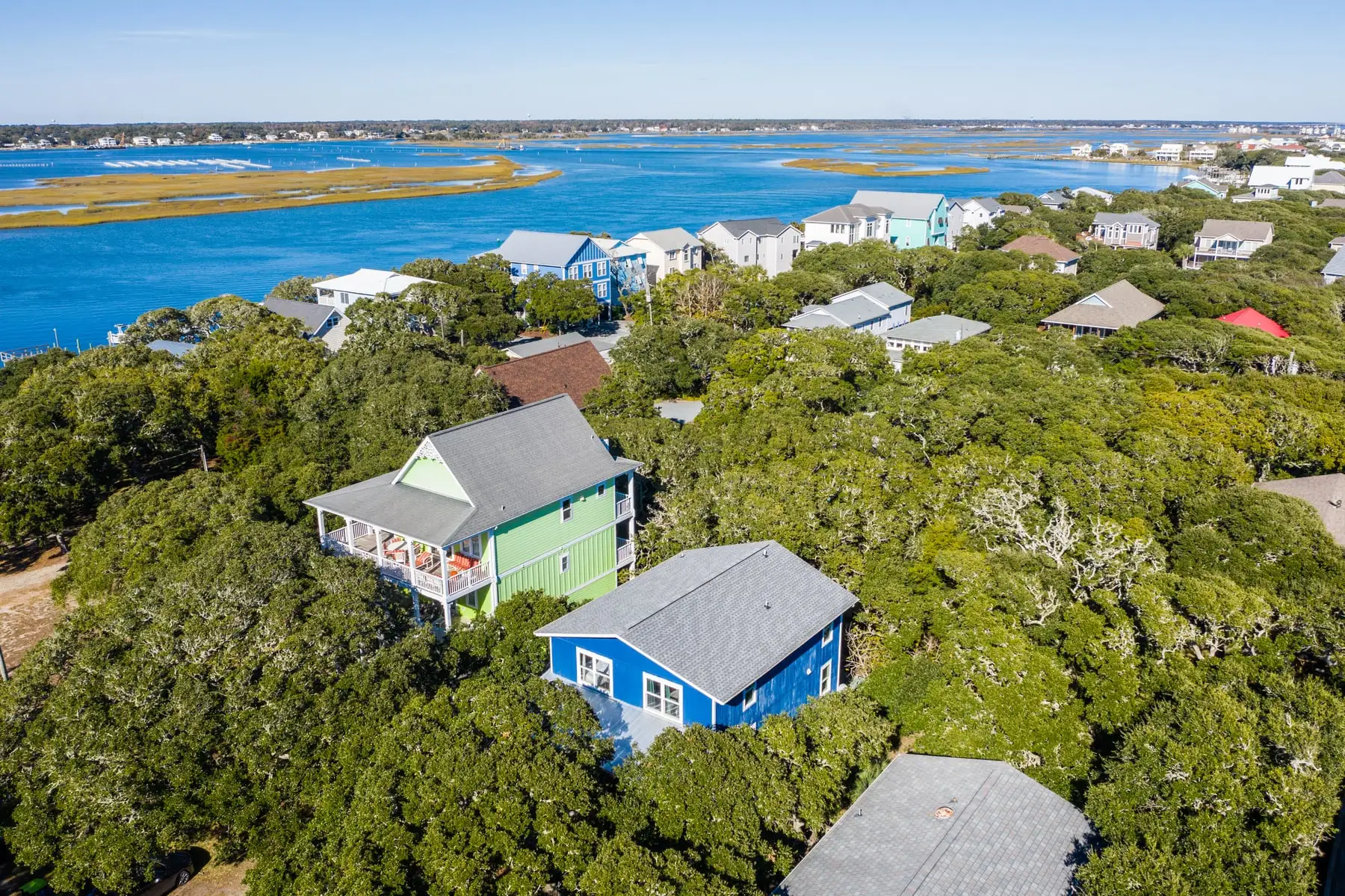
The ocean gets the postcards. The sound gets the fish. Step off the back of the island onto the quiet, marsh-laced water of Topsail Sound and you find a different kind of coast, one where the current moves slow, the oyster banks hum at low tide, and a kid can drop a chicken neck off a dock and pull up a blue crab before the sandwiches are even made. This is the water Sound to Sea was built beside, and it rewards everyone from the first-timer to the captain chasing an inshore grand slam.
What can you catch in the sound around Topsail?
The protected creeks and flats behind the island hold fish year round. Speckled trout and red drum (locals call them puppy drum) cruise the grass edges through every season, and from roughly June into early November flounder move in to complete the treasured inshore grand slam of trout, drum, and flounder. Add black drum and sheepshead around the docks and pilings, and you have a fishery that keeps you guessing. Cast a soft plastic along a marsh bank on a falling tide and hold on.
Then there is the crabbing, which might be the most fun anyone has all week. North Carolina blue crabs run all year but peak from June through October, exactly when you are most likely to be standing on the neighborhood dock with a hand line. You do not need a license for recreational crabbing with a hand line, dip net, or a single collapsible trap. Tie a chicken neck to a string, lower it until it rests on the bottom, wait for the line to go tight, then raise it slow and steady and scoop with a long-handled net. Sunset is prime time. So is the patience of a seven-year-old, which is to say, no patience at all, which somehow still works.
How do you catch crabs off the dock?
Keep it simple. You need string, bait (chicken necks or fish heads work great), and a dip net. Drop the baited line to the bottom near a piling or the edge of the marsh, give it slack, and watch the line. When you feel a steady pull, draw the crab toward the surface gently, then net it from underneath before it lets go. Measure your keepers, toss the shorts and any egg-bearing females back, and you will have a pot worth of dinner by dark. The calm water at the neighborhood dock makes this easy and safe for little hands.
Kayaking and paddleboarding the marsh
The sound side is made for paddling. Glide out at high tide and the spartina grass parts into hidden creeks where herons stalk the shallows and mullet skip ahead of your bow. The water is flat, the wind is usually softer than the beach, and you can be back for lunch.
You do not need to bring your own. Herring’s Outdoor Sports in Surf City has been outfitting the island since 1962 and rents sit-on-top, single, and tandem kayaks by the hour, half day, full day, or week, plus guided and self-guided tours. Surf City Jet Ski and Watersports rents kayaks and paddleboards with life jackets included and knows the calm marsh routes well. Either way, launch on a rising tide so the water carries you home. For the full rundown on launch points, rental shops that deliver, and how to time the tide, see our guide to paddleboarding and kayaking Topsail’s sound side.
Where do you launch a boat near Surf City?
If you trailer your own boat, head to the Surf City Soundside Park boat ramp at 517 Roland Avenue, right on the Intracoastal Waterway beside the NC 50/210 bridge. It is a free North Carolina Wildlife Resources Commission access area with double launch lanes, courtesy docks, roughly 30 trailer spaces, restrooms, and a playground and fishing decks for whoever is not fishing. From there you are minutes from the sound flats and the ICW. Guests at Sound to Sea also have the neighborhood dock and boat ramp on the sound side for easy small-boat and kayak access.
Want a guide? Inshore charters out of the Surf City area
If you would rather have someone put you on fish, the area has licensed inshore captains. NX Fishing Charters runs light-tackle inshore and nearshore trips for red drum, speckled trout, flounder, and sheepshead aboard a boat captained by a USCG-licensed master, with 4-hour and 6-hour options for up to four anglers. Pro Fish NC Charters, fully licensed and insured, runs inshore trips for flounder, red drum, black drum, and trout in the Topsail and Wrightsville waters. A half day with a guide is the fastest way to learn the tides and come home with a cooler.
Do you need a fishing license, and what about the ocean pier?
Anyone 16 or older needs a North Carolina Coastal Recreational Fishing License to saltwater fish, available as a 10-day or annual pass through the state. Kids under 16 fish free. Buy yours before you cast at the official NC Wildlife Resources Commission portal.
Craving the ocean rod-and-reel experience too? The historic Surf City Ocean Pier at 112 S Shore Drive is open spring into late fall, 24 hours a day in season, with a tackle shop, grill, ice cream, and fish-cleaning stations. It is a fun, low-commitment way to fish the surf zone without a boat.
Why the sound side is perfect for kids and first-timers
The ocean is thrilling, but it is also waves, current, and a horizon that intimidates beginners. The sound is the opposite: flat, shallow, sheltered, and full of life you can actually see. Crabs come up on a string. Fish strike close to the dock. A kayak does not flip in a marsh creek. It is the gentlest possible introduction to coastal fishing and boating, and the most likely to create the kind of afternoon a family talks about for years.
Watch your tides (an incoming tide generally fishes and paddles best), wear a life jacket, and keep an eye on afternoon thunderstorms in summer.
Ready to fish, crab, and paddle the calm side of Topsail? Sound to Sea sleeps 11 with private beach access and the neighborhood sound-side dock and boat ramp steps away, and yes, the dog is welcome. Book direct at Sound to Sea.